IPL Session Betting Guide: How to Read Fancy Markets Like a Regular
Match-winner bets are the front door of IPL betting. Sessions are where the regulars live — 20 small markets inside every innings, settled over by over. Here's how they work, with real numbers instead of vague gyaan.
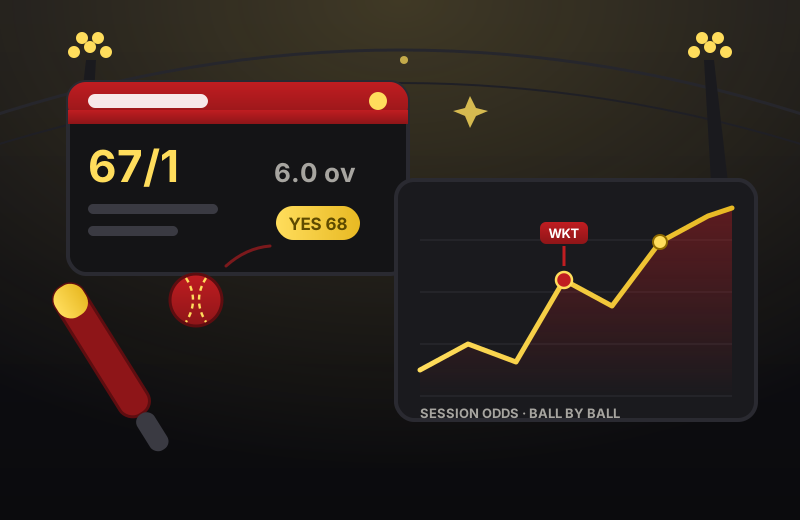
Ask any veteran of Indian betting circles what they play during IPL and the answer is rarely "match odds". It's sessions — the fancy markets that slice a T20 innings into bite-sized bets: runs in the first six overs, runs at the 10-over mark, a batter's individual score, wickets in the innings. Ye hi wo "session" hai jiska naam aapne WhatsApp groups me suna hoga. This guide explains how those markets actually work and how disciplined players approach them with an IPL betting ID.
What Exactly Is a Session (Fancy) Market?
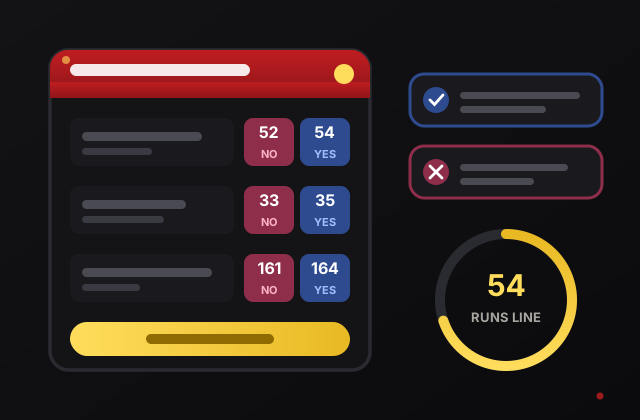
A session market quotes a line — a number — and you bet whether the real figure finishes over or under it. The classic example: 6-over runs. The panel shows something like NO 52 / YES 54. Bet YES and you win if the powerplay produces 54 or more; bet NO and you win if it stays at 52 or below. Land exactly in the gap (53) and both sides typically lose — that 2-run gap is the book's margin, the session equivalent of an odds spread.
Common IPL sessions you'll see on a platform like Laser247:
- Over-block runs: 6-over, 10-over, 15-over and 20-over lines for each innings.
- Individual batter runs: a line on a star player's score, e.g. NO 28 / YES 30.
- Innings wickets: total wickets falling, often NO 5 / YES 6.
- Next-over runs: the fastest market — a line on the very next over, settled in four minutes.
Reading Session Odds: A Worked Example
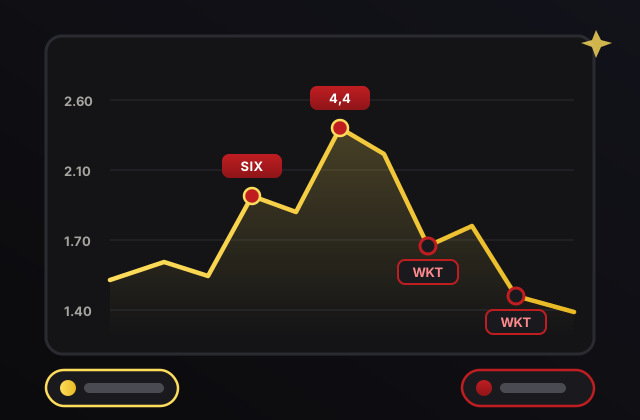
Say Mumbai bat first and the 6-over line opens at NO 50 / YES 52. You take YES 52 for ₹500 at even money. First over goes for 14 — the line instantly jumps to NO 58 / YES 60. Your position is now strong: the market itself says the powerplay is trending past 60, and you bought at 52. You have two choices:
- Hold. Ride it to settlement. Powerplay ends on 63 → your YES 52 wins ₹500. Ends on 51 → you lose ₹500.
- Book profit. On an exchange you can now take NO 58 for a smaller stake, guaranteeing profit if the final figure lands between 53 and 58, and softening the loss elsewhere. This is why session players prefer exchanges — the exit door exists.
Now the reverse: two wickets fall in over three. The line crashes from 60 back to 48 in a dozen balls. If you'd taken YES at 60, you're suddenly stranded. Remember this asymmetry — one wicket moves a session line more than two boundaries do, because a new batter needs sighters and the field spreads confidence.
Get Live Session Lines on WhatsApp
Powerplay Patterns Worth Knowing
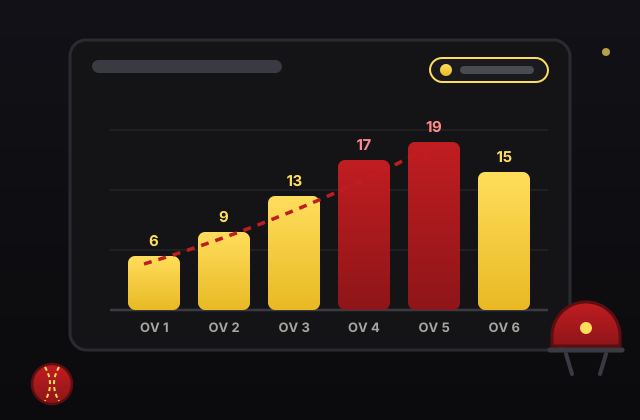
Recent IPL seasons average roughly 55–60 powerplay runs, but the shape matters more than the average. Over 1 is the quietest of the innings — batters take a look, and 5–7 runs is routine even in 200-run games. Acceleration typically starts over 3 and peaks in overs 4–5 once batters have measured the pitch. Practical consequences:
- Opening lines often overreact to reputation. A big-name opening pair pushes the opening 6-over line up 3–4 runs. On slow April pitches in Chennai or Lucknow, that inflated line is NO territory.
- A quiet first over is not a trend. Books drop the line after a 4-run over 1; historically the innings catches up. Cheap YES entries frequently appear at this exact moment.
- Check the venue's first-innings average before the toss. Wankhede and Chinnaswamy powerplays run 8–10 runs hotter than Chepauk. The line knows this — but casual bettors don't, and they're who you're really betting against.
The Rhythm of an Innings: When to Enter
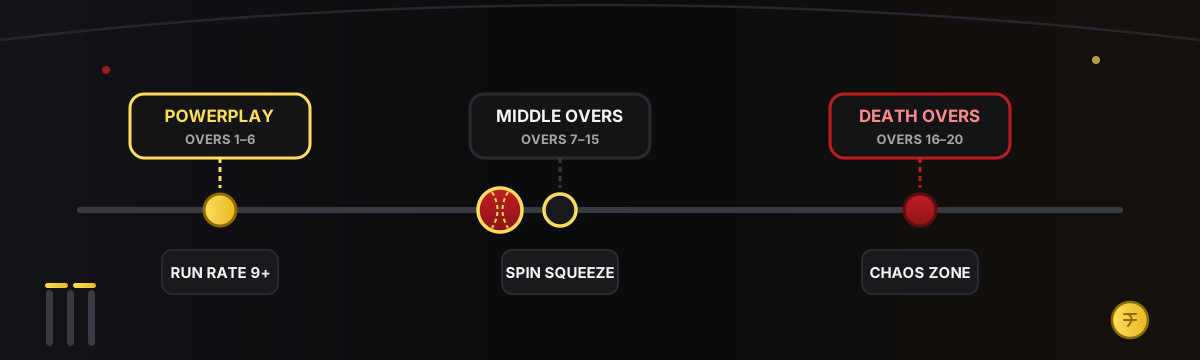
In-play timing separates session regulars from tourists. The innings has three tempos. The powerplay (1–6) is high-scoring but well-priced — everyone models it. The middle overs (7–15) are the value pocket: spinners squeeze, casual money keeps betting YES out of T20 habit, and NO positions on 15-over lines quietly print. The death overs (16–20) are chaos — a single over can go 4 or 24, lines swing wildly, and unless you have a strong read on the specific bowler matchup, watching is a position too.
One more in-play habit: bet between overs, not mid-over. Lines drift ball by ball, and panels sometimes suspend mid-over on big events. Placing at the over break means you know exactly what line you're getting.
Bankroll Discipline: The Non-Negotiable Part

- 5% max per session. Sessions settle in minutes, so tilt compounds in minutes. Cap every single position at one-twentieth of your bankroll.
- Pre-decide your match limit. Three losing sessions in a row? Close the app for that match. The next over doesn't owe you anything.
- Never chase the death overs. Down for the night entering over 16 is precisely when the worst bets get placed. The chaos zone punishes desperation.
- Track every bet. A simple note of line, stake and result reveals within two weeks whether you're actually good at this or just entertained. Both are fine — but know which one you are, and never stake money you can't afford to lose. 18+ always.
Session Markets Open in Minutes — So Does Your ID
Message the desk, pick a session-deep platform like Laser247, deposit via UPI and you're reading live lines before the next over starts. Real support 24×7, fast withdrawals, 18+ only.
Get My IPL Session IDIPL Session Betting FAQs
What is session betting in IPL?
A session (or fancy) market is a bet on a specific slice of the match rather than the result — most commonly "runs scored in overs 1–6". The book posts a line like 52, you bet YES (more than 52) or NO (52 or fewer). It settles as soon as that slice ends, so one match gives you many short, self-contained markets. Start with an IPL betting ID that carries deep session coverage.
What do YES and NO mean in session odds?
YES means the actual figure will finish above the quoted line; NO means it will finish on or below it. If the 6-over line is 52 and the score reaches 53 or more, YES wins. On most panels both sides pay close to even money, with the book's margin sitting in the 2-run gap between the NO line and the YES line.
Which platform is best for IPL session betting?
Exchanges beat books here because lines refresh ball by ball and spreads stay tight. Laser247 is the strongest session platform we issue IDs for — every over of every IPL match carries multiple fancy markets, and you can exit positions mid-session.
How much should I stake on one session bet?
Our rule of thumb: no more than 5% of your total bankroll on any single session, however "certain" it feels. Sessions settle fast, which is exactly why losses compound fast too. A ₹2,000 bankroll means ₹100 sessions — boring, and that is the point.
Is session betting legal and safe in India?
It sits in the same grey zone as all online betting in India — regulated by state, not banned centrally, and played through offshore platforms via ID providers. Use a verified desk, be 18+, and treat it strictly as entertainment. Our online cricket ID page covers the safety fundamentals.
Related reads: get set up first with how to get an online cricket ID, compare session platforms in Laser247 vs Reddybook, and know how your winnings come home in the UPI withdrawal guide. Ready to play? Start at online cricket ID.