Cricket Betting Odds Explained: Read a Price Properly
"What do these numbers actually mean?" is one of the first things every new player asks our desk. This guide answers it plainly — how decimal odds work, how to turn any price into a probability, what "value" really is, and why odds keep moving before a ball is bowled.
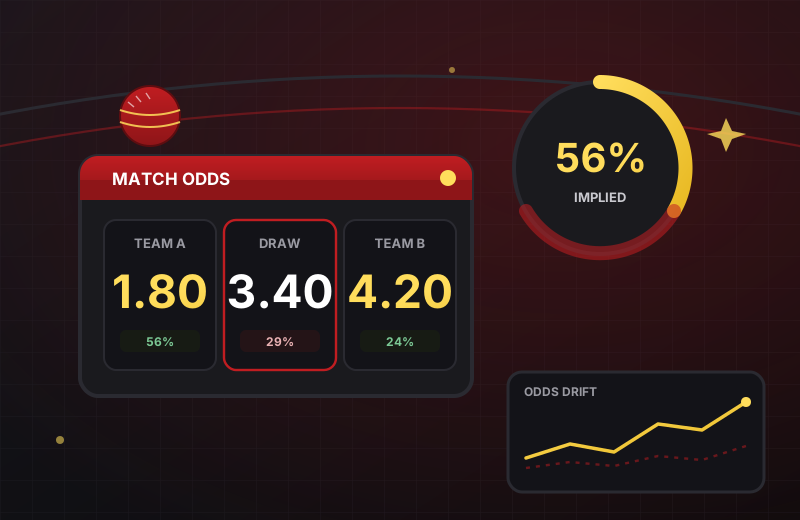
Once you have an online cricket ID and know how to fund it, the numbers on the screen are the next thing that either make sense or make you nervous. A price like 1.80 or 3.40 is not random — it carries two pieces of information at once: how much a winning bet pays, and how likely the market thinks that outcome is. Learn to read both and you stop guessing and start making informed choices. This guide is the desk's plain briefing on exactly that, written for Indian players and free of any "sure tip" nonsense.
We will keep it simple and build up in order: what a decimal odd is, how to convert it into a probability in your head, what "value" means once you can, and finally why the numbers keep shifting right up to the toss. No maths degree required — just a divide button.
What Cricket Betting Odds Actually Tell You
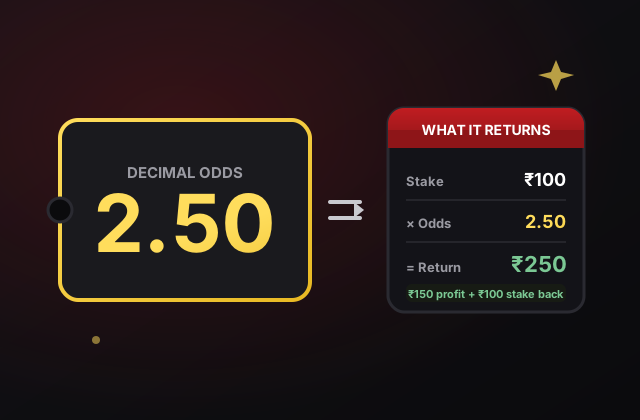
Nearly every Indian cricket platform and exchange shows decimal odds, and they are the easiest format to understand. The number is simply what your stake gets multiplied by if the bet wins — and that figure already includes your original stake coming back. A few worked examples make it click instantly:
- Odds of 2.00. A ₹100 stake returns ₹200 — that is ₹100 profit plus your ₹100 back. This is often called "evens".
- Odds of 1.50. A ₹100 stake returns ₹150, so ₹50 profit. Short odds like this mark a strong favourite.
- Odds of 4.20. A ₹100 stake returns ₹420, so ₹320 profit. Bigger numbers mean bigger payouts on outcomes the market rates less likely.
The rule to carry with you is dead simple: the smaller the number, the more likely the market thinks the outcome is — and the smaller the payout. The bigger the number, the less likely, and the larger the reward. That trade-off is the whole game. If back-and-lay prices on an exchange are still new to you, our cricket betting guide covers how those two sides work.
Turning Odds Into Probability (The One Trick Worth Knowing)
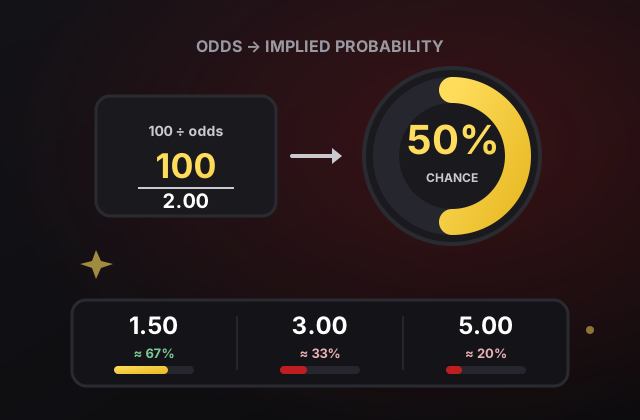
Here is the single most useful skill in this whole guide, and it takes one calculation: divide 100 by the odds and you get the "implied probability" — the market's rough estimate of how likely that outcome is. Try it and it becomes second nature:
- Odds 2.00 → 100 ÷ 2.00 = 50%. A coin-flip in the market's eyes.
- Odds 1.50 → 100 ÷ 1.50 ≈ 67%. A clear favourite.
- Odds 5.00 → 100 ÷ 5.00 = 20%. An outsider.
Why does this matter so much? Because a raw price like "3.40" means nothing on its own, but "about a 29% chance" is something you can actually judge against your own view of the match. Once you can flip any odd into a percentage, you have stopped reading numbers and started reading the market's opinion. Keep this trick in your pocket for every market you look at — the IPL session betting guide uses the same idea on fancy yes/no prices.
Get an ID and Practise on Real Markets
What "Value" Really Means
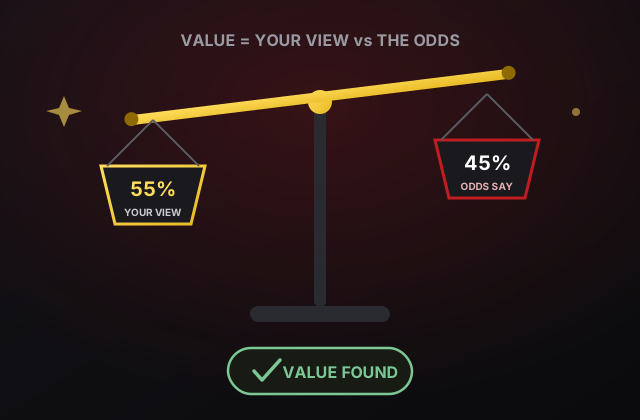
Now that you can turn any price into a probability, you can understand the one word serious bettors care about most: value. Value simply means your own honest estimate of an outcome's chance is higher than the probability the odds imply. If you genuinely think a team has around a 55% chance, but the price implies only 45%, the odds are paying you as though the outcome is less likely than you believe — and that gap is where long-term edge lives.
Be honest with yourself about two things, though. First, value does not mean the bet will win — a value bet can lose, and often does; it only means the price looked generous relative to a fair estimate. The point is that backing genuine value repeatedly, across many bets, is what tilts the maths in your favour over time. Second, your estimate has to be real. Guessing "55%" to justify a bet you already wanted to make is just wishful thinking dressed up as analysis. Value is a discipline, not an excuse — and it is the exact opposite of chasing "guaranteed" tips, which are covered in our betting ID scams guide.
One more piece completes the picture: the margin, sometimes called the overround. Add up the implied probabilities of every outcome in a bookmaker's market and the total comes to a little over 100% — that extra slice is the book's built-in edge. It is why you cannot simply back every result and profit, and why comparing prices across platforms actually matters over a season.
Why Odds Move Before and During a Match
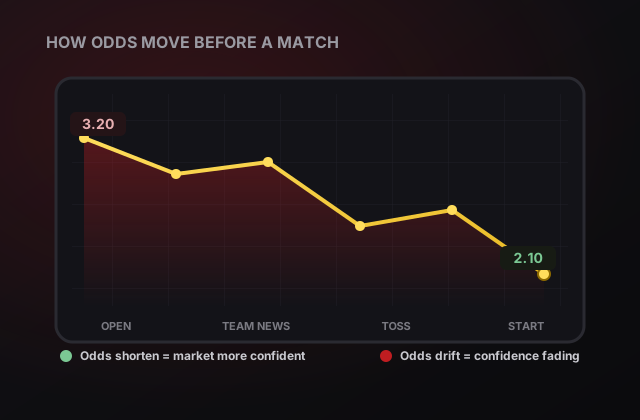
Odds are not fixed. They breathe, shifting from the moment a market opens right up to the first ball and then through the innings in-play. Two forces push them around: new information and where the money goes. Watch how a price behaves and you learn what the market is quietly thinking:
- Odds shorten (the number drops, say 3.20 → 2.10) when the market grows more confident an outcome will happen — often after positive team news or heavy backing on that side.
- Odds drift (the number rises) when confidence fades — an injury, a bad pitch report, or money piling onto the other result.
- The toss is the single biggest pre-match mover in cricket. Batting or bowling first on a particular surface can swing prices sharply, so many players wait for it before committing.
- In-play, odds recalculate ball by ball — a wicket or a big over can flip a price in seconds, which is exactly why live betting rewards patience over reflex.
You do not have to trade every wiggle. But knowing why a price is moving stops you from panicking when it does, and occasionally reveals value before the crowd catches up. If you plan to bet live, pair this with the bankroll discipline in our cricket betting guide.
Reading Odds Sensibly
- Convert before you bet. Turn every price into a probability with the 100 ÷ odds trick, then ask whether you honestly agree with it.
- Short odds are not "safe". A favourite at 1.40 still loses often enough to sting if you overstake. Odds describe probability, never certainty.
- Compare prices. Because of the margin, the same outcome can pay differently across platforms — the better price is free value over a season.
- Stake flat and small. Reading odds well is pointless if one bad bet wipes your balance. Keep stakes consistent and within a set budget.
- 18+ only, entertainment only. No amount of odds knowledge removes the risk of losing your stake. If betting stops being fun or reaches money you need, take a break — our responsible gaming page can help.
Put simply: an odd is a probability wearing a payout. Once you can read both halves — divide by the number for the chance, look at the number itself for the reward — you are no longer betting blind. You will not win every time; nobody does. But you will make informed choices, spot when a price looks generous, and walk away from the ones that do not. That is the whole point of understanding odds.
Want to Try These Prices on Live Cricket?
Laser247, Reddybook, Reddy Anna Book and more — created on WhatsApp in about two minutes, with fast UPI withdrawals and 24×7 support. Read the odds, find the value, play smart. 18+ only, play responsibly.
Get My 12Bet Cricket IDCricket Betting Odds: Questions Players Ask
What do cricket betting odds actually mean?
Decimal odds are simply the figure your stake is multiplied by if the bet wins, and that return already includes your stake back. Odds of 2.00 turn a ₹100 stake into ₹200 (₹100 profit); odds of 1.50 turn ₹100 into ₹150. The smaller the number, the more likely the market thinks the outcome is. New here? Start on our online cricket ID page.
How do I convert odds into a probability?
Divide 100 by the decimal odds. So 2.00 is 100 ÷ 2.00 = 50%, 1.50 is about 67%, and 4.00 is 25%. This "implied probability" is the market's rough estimate of how likely the outcome is. It is the single most useful thing you can do with an odds number, because it tells you what the price is really saying.
What is a "value" bet in cricket?
Value means your own honest estimate of an outcome's chance is higher than the probability the odds imply. If you think a team has around a 55% chance but the odds imply only 45%, that is a value opportunity. Value never guarantees the bet wins — it only means the price looks generous. Over many bets, backing value is what sensible bettors aim for.
Why do cricket odds keep changing before a match?
Odds move as new information arrives and as money goes on each side — team news, the pitch report, injuries, weather and especially the toss all shift them. When odds shorten (the number drops) the market is growing more confident; when they drift (the number rises) confidence is fading. Watching the movement can tell you what the market is thinking.
Do lower odds mean a bet is safer?
Lower odds mean the market thinks the outcome is more likely, not that the bet is "safe". A short-priced favourite still loses often enough to hurt if you stake too much on it, and betting always carries the risk of losing your stake. Odds describe probability and payout — they never remove risk. Read our honest safety guide for more.
What is the "margin" or overround in odds?
If you add up the implied probabilities of every outcome in a market, a bookmaker's set will total slightly more than 100%. That extra slice is the margin — the built-in edge that keeps the book in business. It is why you cannot simply back every result and profit, and why shopping for the fairest odds matters over time.
Are fractional and decimal odds different?
They are two ways of writing the same thing. Fractional odds like 6/4 show profit-to-stake, while decimal odds like 2.50 show the total return per unit staked. Most Indian cricket platforms and exchanges use decimals because they are easier to compare and to convert into probability. Our cricket betting guide covers back and lay prices on an exchange.
Can understanding odds guarantee I win?
No. Reading odds well helps you spot fair prices and avoid bad ones, but every cricket bet still carries the risk of losing your stake, and no method changes that. Odds knowledge is about betting smarter, not winning for certain. Only ever stake money you can afford to lose, and see our responsible gaming page if play stops being fun.
Next reads: learn the markets and back-and-lay basics in the 12bet cricket betting guide, read fancy prices in the IPL session betting guide, or start on the online cricket ID page to get set up.