Cricket Betting Bankroll Management: Stake Small, Play Longer
Most players who quit betting fast were not unlucky with their picks — they were reckless with their stakes. This is the desk's plain guide to managing a betting bankroll: how to ring-fence a budget, bet in small units, choose a staking method, and use a stop-loss so one bad session never becomes a disaster.
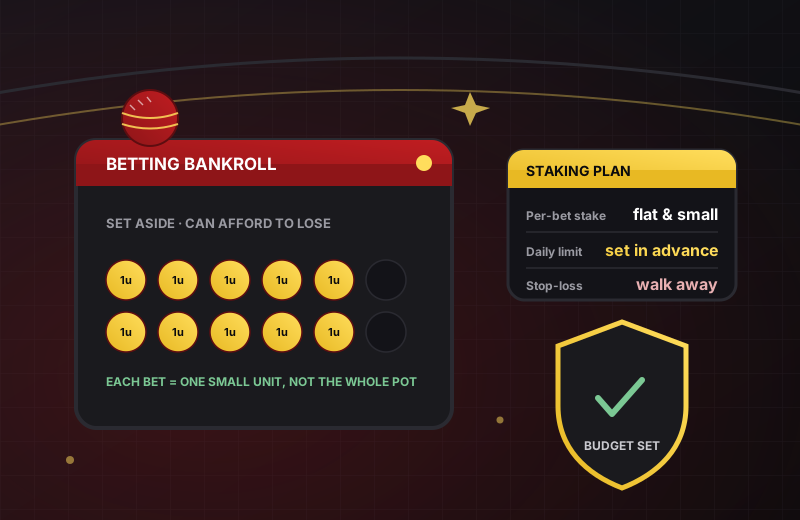
Ask any player who lasted a season what kept them going, and it is almost never a magic tip — it is discipline with money. You can read odds perfectly and still empty your account in a weekend if your stakes are all over the place. Bankroll management is the unglamorous skill that quietly decides whether betting stays a bit of fun or turns into a hole. This guide walks through it the way our WhatsApp desk explains it to new players every day — no jargon, no false promises, just habits that keep you in control.
We will build it up in four steps: what a bankroll actually is, why you should stake in small units, how to pick a staking method, and the discipline that stops a bad day snowballing. None of it is complicated. All of it matters more than any single bet you will ever place.
What a Betting Bankroll Actually Is
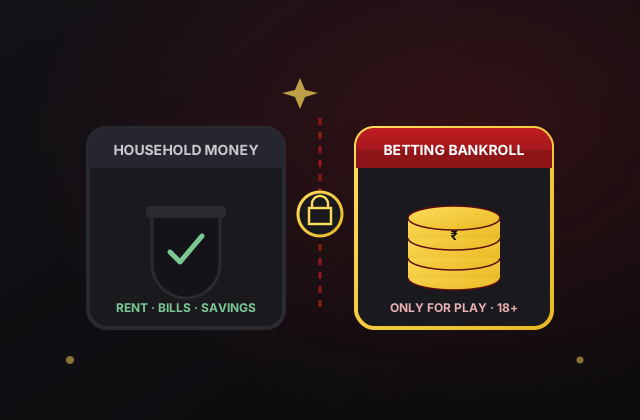
A bankroll is money you have set aside only for betting — an amount you decided, calmly and in advance, that you can afford to lose completely. The key word is separate. It is not "whatever is sitting in my account", and it never touches rent, bills, groceries or savings. Ring-fence it in your head the way you would a small entertainment budget for the month, because that is exactly what it is.
Why bother? Because the moment betting money and living money blur together, every decision gets emotional. A loss feels like losing "real" money you needed, so you chase it. A win tempts you to reinvest cash you should have banked. Keeping a defined bankroll — satta ke liye alag budget — puts a hard edge around the whole activity: when it is gone, you are done for the session or the month, full stop. That single boundary does more to protect players than any tipster ever could. If you are only just setting up, our deposit guide covers funding your ID sensibly, and the online cricket ID page explains how the whole thing works.
Stake in Units, Not Lumps
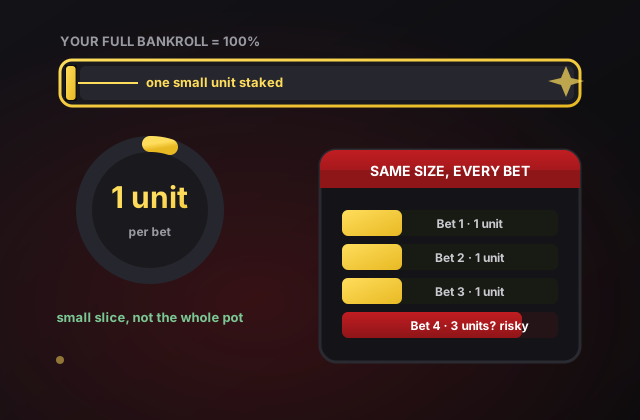
Here is the habit that changes everything: stop thinking in rupees and start thinking in units. A unit is one small, fixed slice of your bankroll that becomes your standard bet size. One unit per bet, every bet. Whether you feel confident or nervous, the stake stays the same. That consistency is the entire trick — it takes emotion out of sizing and makes a losing run survivable instead of fatal.
The reason small units matter is simple maths about bad runs. Even sensible bettors hit losing streaks; it is normal, not a sign you are doing anything wrong. If every stake is a large chunk of the pot, a handful of losses in a row can wipe you out before your judgement ever gets a chance to pay off. Keep each stake small and the same losing streak barely dents the bankroll — you are still in the game when things turn. As a rule of thumb our desk repeats constantly: no single bet should ever be able to hurt your bankroll badly. If a bet could, it is too big. Resist the urge to "double up" on a match you love; that is how good players turn a normal week into a broke one.
Get an ID and Practise Sensible Stakes
Flat Staking vs Percentage Staking
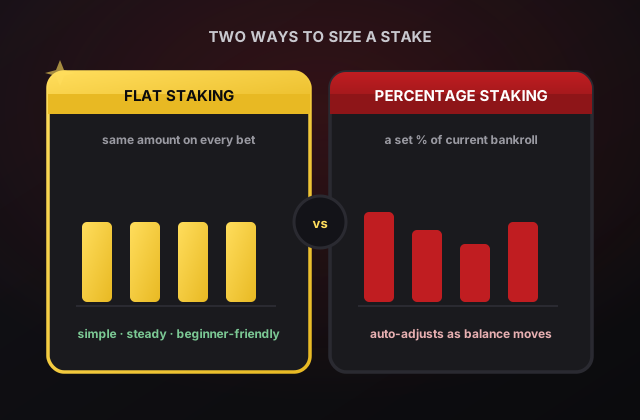
Once you accept small, consistent units, there are two common ways to size them — and neither is "better" for everyone.
Flat staking means the exact same amount on every bet, regardless of how your bankroll is doing. It is the simplest method there is, which makes it ideal when you are starting out. There is nothing to calculate, nothing to overthink, and it forces the consistency that beginners most need. The only downside is that it does not automatically protect you on a losing run, because the stake never shrinks with the pot.
Percentage staking means betting a set share of your current bankroll each time. When you are down, your stake naturally gets smaller, cushioning a bad run; when you are up, it grows a little. It protects the pot better, but it asks you to recalculate and to track your balance honestly. Many players do the sensible thing: start flat while the habit forms, then graduate to percentage staking once tracking their results is second nature. Whichever you pick, write the rule down and follow it — a staking plan you ignore is just a wish. For how the underlying prices decide your returns, keep our odds explained guide close.
The Discipline Part: Stop-Loss, Chasing and Tilt
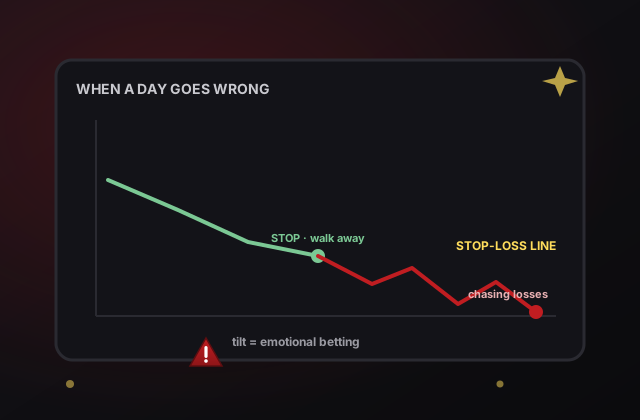
Staking rules only work if you actually keep them, and the hardest moment to keep them is exactly when it matters most: after a loss. This is where two ideas earn their place.
A stop-loss is a limit you set before you start — a number of units, or a rupee amount, at which you stop for the day no matter what. Decide it while you are calm, because the whole point is that it protects you from the version of you that is frustrated and certain the next bet will "get it back". When you hit it, you walk away. It is not exciting, but honouring your stop-loss is the clearest line between controlled play and trouble. Many players set a win limit too — a point where they bank profit and stop, so a good day does not get handed back.
The enemy of all of this is chasing: trying to claw back a loss by betting bigger or more often on impulse. Chasing feels logical in the moment and is almost always a mistake — it throws out every rule you made when you were thinking straight, stakes balloon, and picks get careless. Its cousin is tilt, betting on emotion rather than judgement after a bad beat. The odds do not owe you anything back, and a lost bet is simply gone. The bettors who last are the ones who accept that a losing day is allowed to just be a losing day. If you feel the pull to chase, that is the signal to close the app — not to send one more message. Our scams guide covers the "guaranteed recovery" sellers who prey on exactly this urge.
Bankroll Rules Worth Sticking To
- Only bet money you can afford to lose. The bankroll is entertainment budget, never rent, EMI or savings. If losing it would change your month, it is too much.
- Keep it separate. Ring-fence betting money from everyday money so no single loss feels like a crisis.
- Stake small and consistent. One small unit per bet. No bet should be able to badly dent the pot.
- Set a stop-loss and a time limit before you start. Then honour both, especially when you least feel like it.
- Never chase. A lost bet is gone; trying to win it back fast is how small losses become big ones.
- Track your results honestly. Reviewing real numbers beats relying on memory, which flatters the wins and forgets the losses.
- 18+, entertainment only. No staking plan removes the risk of losing your stake. If play stops being fun or affordable, take a break — our responsible gaming page can help.
Put together, bankroll management is really just one promise you make to yourself: bet only what you set aside, keep each stake small, and stop when you said you would. It will not turn a losing bettor into a winner — nothing does that on demand, and anyone claiming otherwise is selling something. What it will do is keep betting affordable, keep a bad run survivable, and keep you in control. That is the version of the game worth playing.
Ready to Play Smart on Live Cricket?
Laser247, Reddybook, Reddy Anna Book and more — an ID created on WhatsApp in about two minutes, with fast UPI withdrawals and 24×7 support. Set a budget, stake small, and enjoy the cricket. 18+ only, play responsibly.
Get My 12Bet Cricket IDBankroll Management: Questions Players Ask
What is a betting bankroll?
A betting bankroll is a fixed pot of money you set aside purely for betting — money you have decided in advance you can afford to lose without it touching rent, bills or savings. It is kept separate from your everyday money, and once it is gone, that is the session or month done. Thinking of it as a ring-fenced budget rather than "whatever is in my account" is the single biggest habit that keeps play under control. New here? Start on our online cricket ID page.
How much of my bankroll should I stake on one bet?
Most disciplined bettors keep each stake small relative to the whole pot — commonly a single low-percentage "unit" rather than a large chunk. The exact figure is personal, but the principle is universal: no one bet should be able to hurt your bankroll badly. Small, consistent stakes let a normal losing run pass without wiping you out, which is the whole point of managing a bankroll in the first place.
What does staking in "units" mean?
A unit is one fixed, small slice of your bankroll that you treat as your standard bet size. Instead of thinking in rupees that change with your mood, you think in units — one unit per bet, every bet. It keeps your staking consistent, stops you overreacting to a win or a loss, and makes it easy to see how you are doing over time. Consistency is what turns bankroll management from an idea into a habit.
Is flat staking or percentage staking better?
Neither is "better" for everyone. Flat staking means the same amount on every bet — simple, steady and ideal for beginners. Percentage staking means a set share of your current bankroll, so stakes shrink when you are down and grow when you are up, which protects the pot on a bad run. Many players start flat because it is easiest to follow, then move to percentage once tracking becomes second nature.
What is a stop-loss in betting?
A stop-loss is a limit you set before you start — a point at which you stop for the day no matter what. If you decide you will walk away after losing a set number of units, you honour it even when you are convinced the next bet will "get it back". A stop-loss exists precisely for the moments your judgement is worst, and sticking to it is what separates controlled play from chasing.
What is chasing losses and why is it dangerous?
Chasing is trying to win back a loss quickly by betting bigger or more often, usually on impulse. It is dangerous because it throws out every rule you set when you were thinking clearly — stakes balloon, picks get careless, and one bad session can undo weeks. The odds do not owe you anything back, and a lost bet is gone. Betting always carries the risk of losing your stake; chasing simply makes that risk larger.
Does good bankroll management mean I will make a profit?
No. Bankroll management does not create winning bets or beat the built-in margin in the odds — nothing does that reliably. What it does is control how much you risk, keep a losing run survivable, and keep betting an affordable form of entertainment rather than a problem. It is about staying in control and playing responsibly, never a promise of profit. See our odds guide for how prices really work.
What should I do if I cannot stick to my limits?
If you find yourself pushing past the budget and stop-loss you set, betting money you need, or chasing to feel better, that is a sign to step back — not to try harder. Most platforms offer deposit limits and self-exclusion tools, and you can take a break at any time. Betting should stay fun and affordable; if it stops being either, our responsible gaming page has help and next steps. Support is always 18+ and judgement-free.
Next reads: learn how prices decide your returns in the cricket betting odds guide, see the markets worth backing in the 12bet cricket betting guide, read fancy prices in the IPL session betting guide, or start on the online cricket ID page to get set up.